
March 3, 2026
hoyasadminProtecting Your Assets: Commercial Auto and Property Insurance in Northeast Ohio
Sometimes you might assume insurance is just a checkbox, buy a policy, show proof, move on. But if you run a business in Cleveland, you already know the real challenge isn’t whether to insure. It’s how to choose the right coverage when you’ve got vehicles on the road, equipment in the building, inventory on the shelves, and customers walking through the door.
So here’s the question worth pausing on: if something goes wrong tomorrow, do your commercial auto and property policies actually protect what you’ve built, or do they just meet the minimum?
This guide breaks down what commercial auto and business property insurance typically cover, what Cleveland-area businesses often miss, and how we help you sort through the options without the overwhelm. At Hoyas Insurance Group, we work with businesses throughout Cuyahoga and Lorain County, and we’ll tell you the truth: most “insurance headaches” aren’t caused by one big mistake, they’re caused by small gaps that don’t show up until claim time.
Why commercial auto and property coverage belong in the same conversation
It’s easy to treat these as separate purchases: one policy for vehicles, another for your building. In reality, they’re connected because they protect the two things that keep your business running:
- Mobility (your vehicles, drivers, deliveries, job site travel)
- Operations (your location, tools, inventory, equipment, and space)
If your van is totaled and you can’t get to job sites, you lose revenue. If your building has a water loss and your inventory is damaged, you might shut down for weeks. Strong coverage keeps a bad day from turning into a long-term setback.

Commercial auto insurance in Cleveland: the baseline vs. real protection
Ohio requires liability insurance for vehicles used in business. The required minimum is often referenced as 25/50/25:
- $25,000 bodily injury per person
- $50,000 bodily injury per accident
- $25,000 property damage
That’s the legal baseline. The truth is, minimum limits can disappear fast in a serious accident, especially with today’s repair costs, medical bills, and multi-vehicle crashes on major routes around Greater Cleveland.
When you’re shopping for commercial auto insurance in Cleveland, think of liability limits as your foundation. Then you decide what else needs to be built on top of it based on how your vehicles are actually used.
Common commercial auto coverages (in plain English)
Here are the options you’ll usually see, and what they’re for:
- Liability: Pays for injuries or damage you cause to others. This is the required piece.
- Collision: Helps repair or replace your vehicle after a crash (regardless of fault).
- Comprehensive: Covers non-collision losses like theft, vandalism, hail, or storm damage.
- Uninsured/Underinsured Motorist: Helps protect you if another driver causes a loss but doesn’t have enough insurance (or any).
- Medical Payments: Helps cover medical costs for the driver and passengers in your vehicle.
- Hired & Non-Owned Auto (HNOA): Coverage for liability when employees use personal cars for work errands, or when you rent/borrow vehicles.
That last one, HNOA, is a big deal. Many Cleveland businesses rely on employee vehicles more than they realize: quick bank run, picking up supplies in a personal truck, meeting a client across town. You might think, “Their personal insurance covers it.” Sometimes it does… sometimes it doesn’t… and even when it does, your business can still be named in the lawsuit.
What drives the cost of commercial auto insurance (and what you can control)
You’ll see different numbers depending on your industry and vehicle type, but many small businesses land somewhere in the broad range of $1,200–$2,400 per vehicle per year for basic coverage. Some Cleveland-area policies average around $147/month per policy, though that can swing widely.
Pricing typically depends on things like:
- Driver records and experience
- How many vehicles you insure
- Vehicle type and value (pickup vs. box truck vs. specialty vehicle)
- Annual mileage and radius of operation (local vs. regional)
- What you carry (tools, materials, equipment, deliveries)
- Where vehicles are parked overnight (secured lot vs. street parking)
What you can control most often:
- Keeping driver info up to date (who’s driving what)
- Avoiding “unknown usage” (be clear about how vehicles are used)
- Choosing deductibles that make sense for your cash flow
- Bundling smartly with property and liability when it helps (not just to “get a discount,” but to reduce gaps)
Business property insurance: what it covers (and what people often assume)
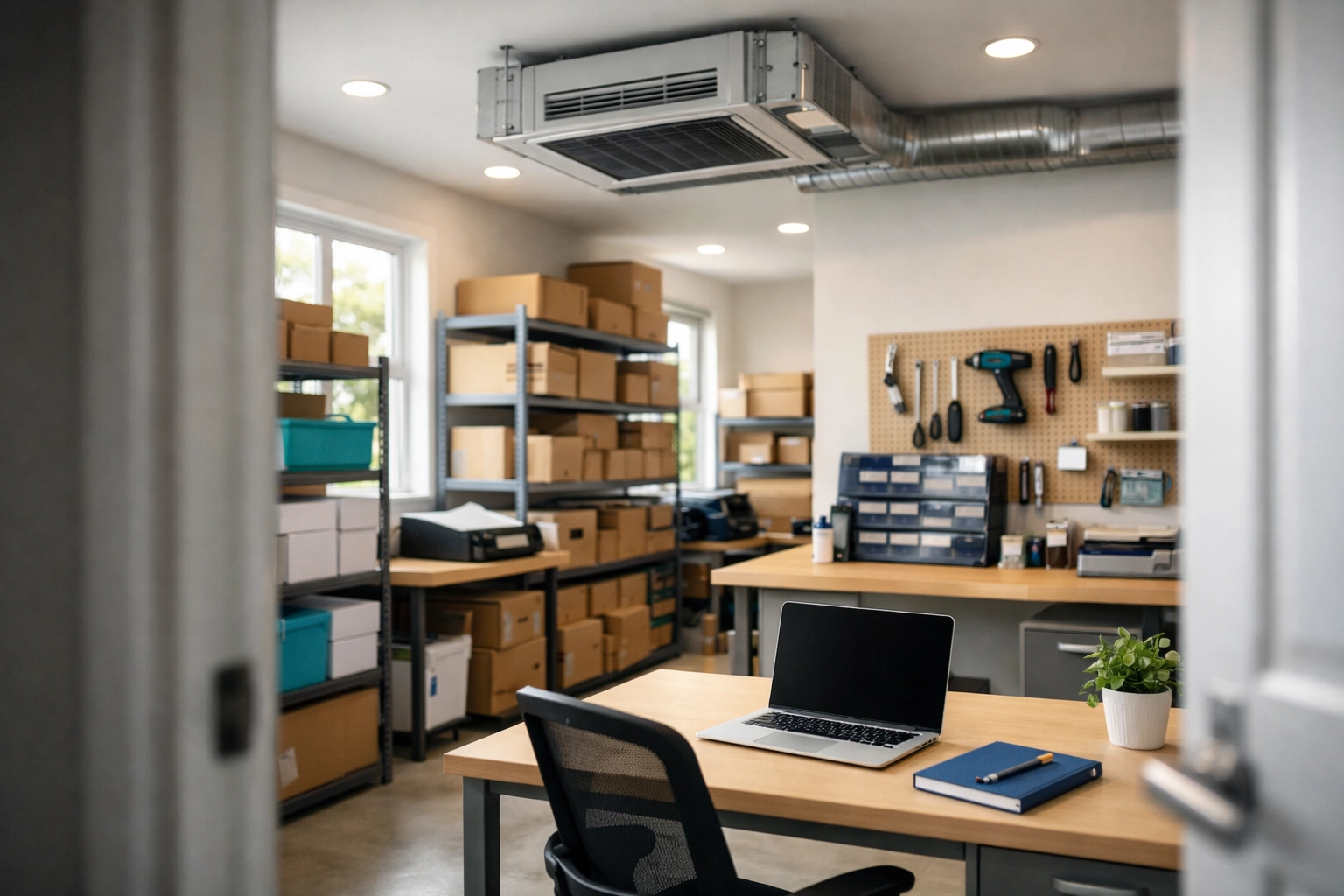
If you own or lease a space in Cuyahoga or Lorain County, office, storefront, warehouse, shop, or light industrial, business property insurance helps cover damage to the physical stuff your business depends on.
Depending on your policy structure, it can cover:
- Building coverage (if you own the building)
- Business personal property (BPP) like furniture, inventory, tools, equipment, and supplies
- Signage (sometimes included, sometimes scheduled)
- Outdoor property (often limited)
- Business income / loss of income (helps replace income if you can’t operate after a covered loss)
- Extra expense (helps pay the added costs to keep running, like temporary space)
When people search business property insurance, they usually focus on fire and theft, and yes, those matter. But in Northeast Ohio, we also see clients surprised by how often claims involve:
- Water damage (not all water is covered the same way)
- Wind and storm-related losses
- Vandalism
- Burst pipes or HVAC issues
- Smoke damage from a nearby incident
The biggest misconception is thinking “property insurance covers everything that happens to my property.” In reality, policies cover specific types of losses, and the details matter.
The coverage details that decide whether a claim goes smoothly
This is where the “overwhelming options” usually show up: and where having a local advisor helps. These are the knobs and levers that change how protection actually works.
1) Replacement cost vs. actual cash value
- Replacement cost aims to pay what it costs to replace today (without subtracting depreciation).
- Actual cash value subtracts depreciation, which can leave you short: especially for older equipment.
If you’ve got older tools, aging HVAC, or used equipment, replacement cost can be the difference between “we recovered” and “we’re stuck.”
2) Your deductible
A higher deductible can lower premium, but it also means you’re self-funding more of the loss. The right deductible is the one you can comfortably pay without derailing operations.
3) Business income coverage
After a major property claim, the building can be repaired… but the lost time can hurt more than the physical damage. Business income coverage is often the piece that keeps payroll and fixed costs manageable while you get back on your feet.
4) Ordinance or law
If you own an older building in Cleveland or the surrounding suburbs, building code upgrades can be expensive. Ordinance or law coverage can help with costs tied to code compliance during repairs.
5) Named perils vs. special form (open perils)
Policies can differ in how broadly they cover causes of loss. This is one of those technical-sounding choices that has very real consequences at claim time.
Real-world scenarios Cleveland businesses run into (and how insurance responds)
To make this practical, here are a few examples we see in the real world:
Scenario A: Employee uses a personal car for a quick delivery and causes an accident
The customer’s attorney names both the driver and your business. Personal auto might respond: but it might also push back because the car was being used for business. This is where Hired & Non-Owned Auto can be critical.
Scenario B: Your work van is broken into overnight
Comprehensive coverage can help replace the vehicle damage. But what about the tools inside? Tools may be covered under a property/inland marine-type coverage, not always under the auto policy. If you’re a contractor, this is a common gap.
Scenario C: A pipe bursts in your leased space and ruins inventory
Business property insurance might cover the damaged inventory, depending on cause and policy terms. But you’ll also want to know: are you covered for lost income while you restock? Do you have coverage for extra expense to set up temporarily?
These are the moments when “I have insurance” turns into “I have the right insurance.”
Why Cleveland-area businesses feel overwhelmed by insurance options
If you’ve ever gotten three quotes that all look different, you’re not imagining things. Policies can vary by:
- Coverage limits and deductibles
- Exclusions and endorsements (the add-ons that change coverage)
- Claim service approach and carrier appetite
- How vehicles and property are classified
- Optional coverages that may or may not be included by default
And because each carrier asks questions differently, you can end up comparing apples to oranges. That’s usually where frustration sets in.
Our job is to make your options comparable and your decision clear. Not by pushing the “cheapest” or the “biggest,” but by lining up coverage with how you operate day-to-day.
How Hoyas Insurance Group helps you choose commercial auto and property coverage (without the hassle)
We’re an independent insurance agency, and we work as your advisor: meaning we help you shop and structure coverage based on your actual risks. If you’re in Cleveland, Cuyahoga County, or Lorain County, we also understand the local realities: dense traffic corridors, mixed-use buildings, older properties, seasonal weather, and the way small businesses really run.
Here’s what the process typically looks like with us:
1) We map your “risk story”
We start with questions that actually matter:
- Who drives? Where? How often?
- What’s in your vehicles: tools, equipment, inventory?
- Do employees ever use personal vehicles for work?
- Do you own or lease the building?
- What would a 2-week shutdown cost you?
2) We build a coverage plan you can understand
You’ll see what’s essential, what’s optional, and what’s only “nice to have.” If something is excluded, we’ll say it plainly.
3) We compare carriers and options in a way that’s actually comparable
Instead of handing you a stack of PDFs, we focus on the real decision points: limits, deductibles, replacement cost terms, business income, and auto liability exposures.
4) We stay involved after the policy is issued
Businesses change: new vehicles, new drivers, new locations, new contracts. We help you keep coverage aligned so you’re not accidentally underinsured a year from now.
If you want to explore options, you can start here: https://www.hoyasinsurancegroup.com/coverage/business and for vehicle coverage details: https://www.hoyasinsurancegroup.com/coverage/auto
Quick checklist: what to review before you renew (or before you buy)
If you’re revisiting your coverage this year, here are smart questions to ask: especially if you’re responsible for protecting business assets.
Commercial auto checklist
- Are your liability limits high enough for your real-world exposure?
- Do you have Hired & Non-Owned Auto if employees use personal vehicles?
- Do you have comprehensive and collision for vehicles you can’t easily replace?
- Are all drivers and vehicles listed correctly?
- Are you carrying tools or equipment that need separate coverage?
Property checklist
- Is your property insured to replacement cost where appropriate?
- Is your inventory/equipment value updated (not from three years ago)?
- Do you have business income coverage: and does the time limit make sense?
- Do you understand your water/wind coverage and deductibles?
- If you lease, is it clear who covers improvements and betterments?

The goal isn’t “more insurance.” It’s the right protection for how you operate.
In the end, protecting your assets in Northeast Ohio comes down to clarity: knowing what you own, how you use it, what would hurt to lose, and what coverage actually responds when something happens.
If you’re currently comparing commercial auto insurance in Cleveland or trying to make sense of business property insurance options for your location, we’re here to help you narrow it down and choose confidently: without getting buried in jargon or sales pressure.
Hoyas Insurance Group proudly serves businesses across Cuyahoga and Lorain County. If you want a second opinion on your current policies or you’re starting fresh, visit https://www.hoyasinsurancegroup.com and we’ll help you build a plan you can trust for years to come.
Categories: Blog